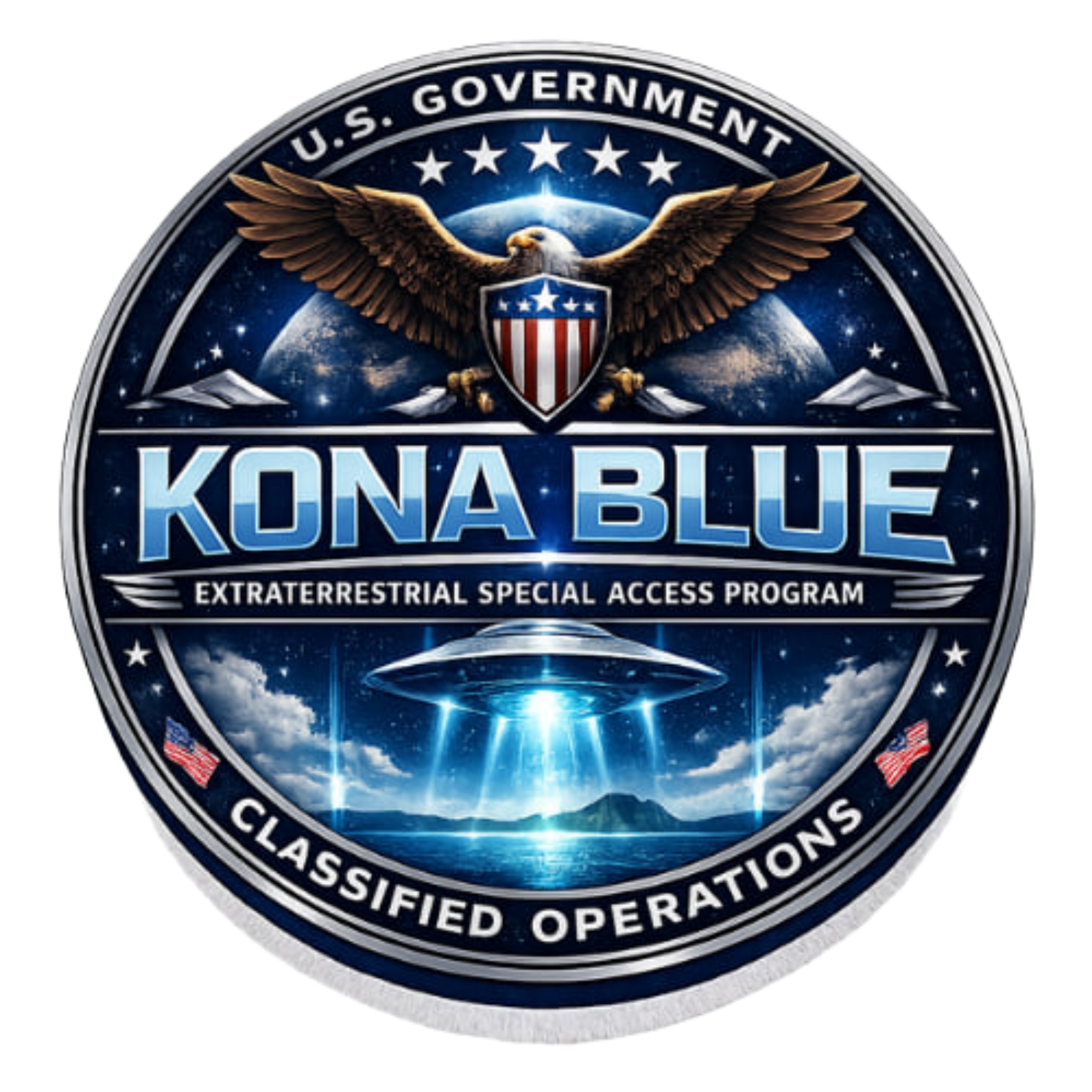
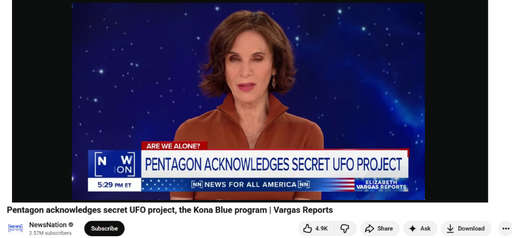
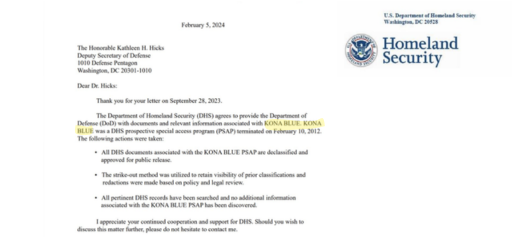
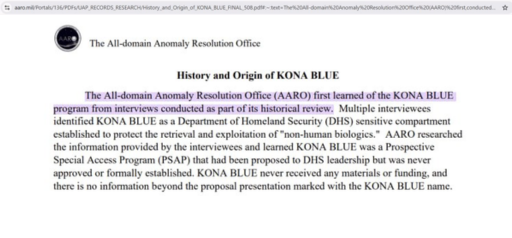
In the quiet corridors of government offices, where uncertainty is treated like a threat and rumors travel faster than evidence, a name began to circulate among analysts: KONA BLUE. It was never meant for the public -- just a proposed compartment, a secure structure designed to hold answers if the impossible turned out to be real. Reports spoke of anomalous sightings, unexplained materials, and claims that somewhere beyond the known inventory of human technology, something else might exist.
The proposal imagined a Special Access Program where only a handful would be allowed inside. Within KONA BLUE, investigators would separate myth from measurable reality -- cataloging alleged artifacts, examining reports of "non-human biologics," and determining whether decades of whispers concealed a technological truth. It was less a confirmation than a contingency: a government preparing for a scenario it could not yet prove, but could not fully ignore.
As analysts reviewed cases, many mysteries dissolved under scrutiny -- optical effects, satellite flares, misidentified systems. The extraordinary repeatedly collapsed into the explainable. Yet the existence of the proposal itself lingered like a shadow, a reminder that somewhere between skepticism and belief, the government had briefly considered creating a compartment for the unknown. KONA BLUE stood at that threshold -- not a vault filled with alien machines, but a plan for what would happen if such a vault ever needed to exist.